❋
October 16, 2026Midterm Mark
Week 8What I’ve Made & Done
Prepping for Midterm Presentations
I’m hoping to use this presentation to:
Start learning how to tell my thesis’s “story”
Last year I took notes during the final thesis presentations about how people structure their thesis “stories,” and I wrote this down as an outline I’d like to try:
Define the problem and relate it to the audience
Share the personal connection/story
Start big with the issue and place it in the wider context
Funnel down to your specific research
Show your work
Think more about the “look” of my thesis
Soon I’d like to establish a consistent look (perhaps a brand) for my thesis work that I can use across the presentation, exhibition, materials advertising the exhibition, and any other materials I need as part of the thesis and exhibition. I think if I can figure out some effective visuals to show this work, it’ll help make the work recognizable across different formats and make it easier to produce any last-minute materials I need (I guess that’s the purpose behind branding, isn’t it)
And of course get feedback from peers and faculty
I’d like to have some questions prepped to take advantage of this time I have to show what I’ve been thinking about and doing so far, get ideas for things I hadn’t thought about, and see how my project lands with people outside my committee.
Intaglio Prints - Learning a New (and Time-Consuming) Skill
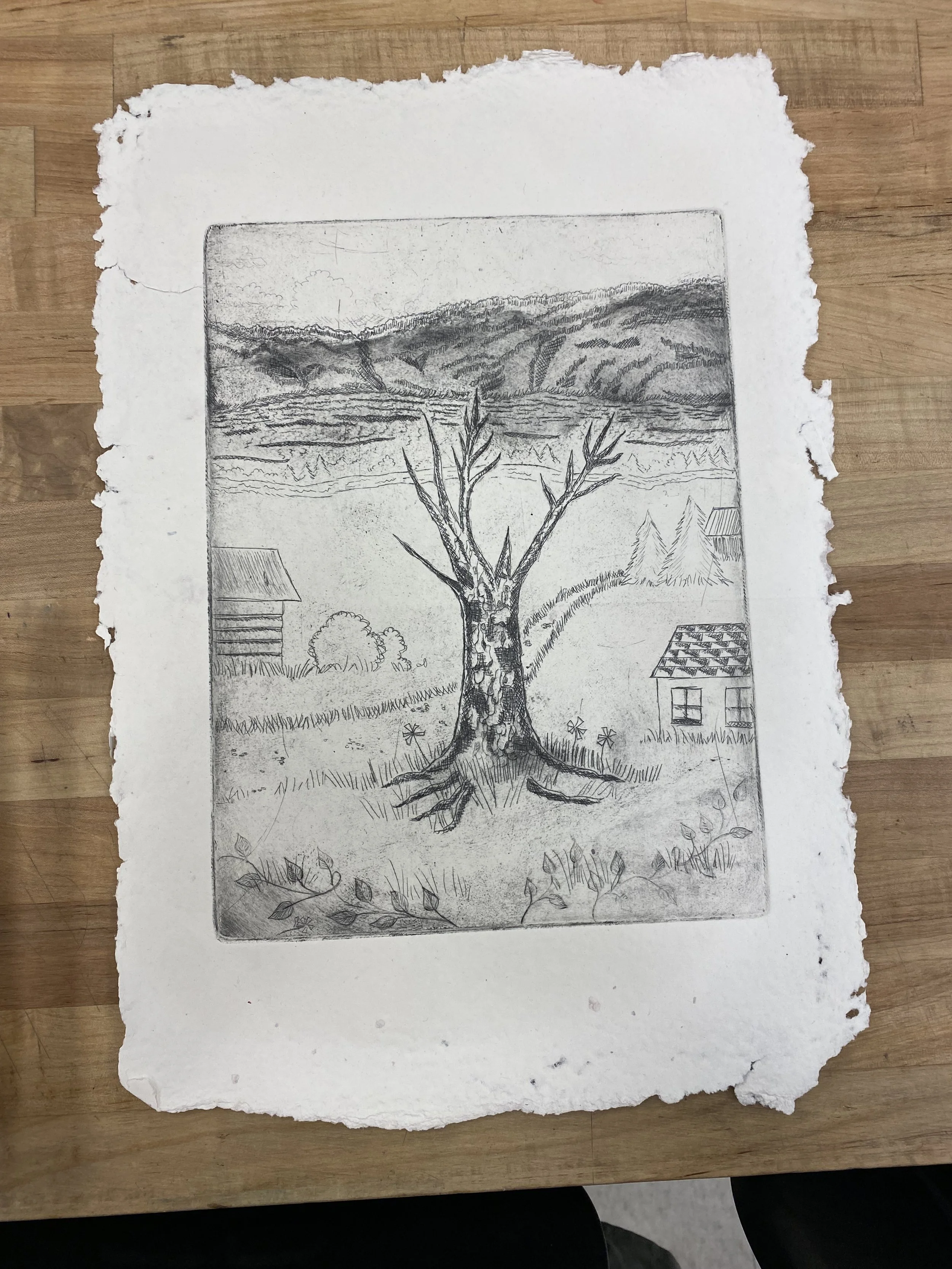
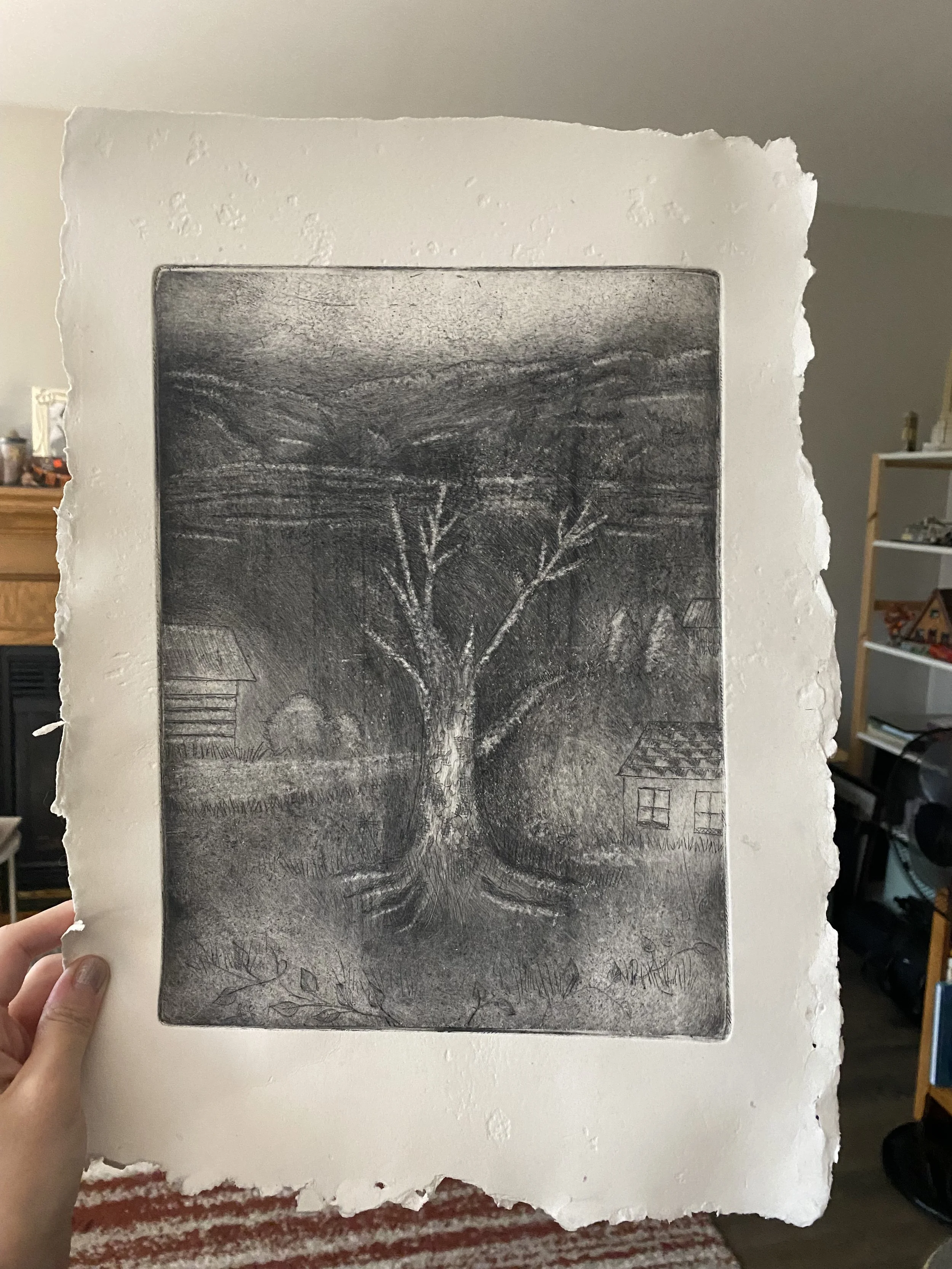
Two of my intaglio prints of “the Peace Tree” I’ve created over the past week or two. These prints depict a local landmark where I grew up. The themes are rural storytelling & change. The design was etched into a copper plate for printing.
These are printed on handmade paper. I’m excited to see how I can incorporate handmade paper and potentially some of these prints in my exhibition.
Also found some cool ideas for incorporating place-based natural elements in my prints
What I’ve Been reading
Journal articles
This article draws from an example in a Chinese village, so there are definitely some differences here from Iowa towns, but I like that it describes people living in a community as “the creators of local culture” (section 4.1) as opposed to an outside artist or designer who is considering “how to activate the rural history and culture through their own creations.”
The article states when artists don’t create art based on the actual needs of people in the community, it can discourage people from “having positive attitudes towards art intervention” (section 4.1). Kind of shooting yourself in the foot. It can be challenging to come together and create together. I’m not exactly working in the countryside, I’m working with a town, but I like the quote, “Art intervenes in the countryside to activate culture. The ideal is always the “wishful thinking” of the artist” (Section 4.1).
Essentially, art interventions need to put the community members in the primary seat and “give full play to [their] wisdom and creativity” (Section 4.2).
Liu F, Lin B, Meng K. Design and Realization of Rural Environment Art Construction of Cultural Image and Visual Communication. Int J Environ Res Public Health. 2023 Feb 23;20(5):4001. doi: 10.3390/ijerph20054001. PMID: 36901011; PMCID: PMC10001604.
Other media
I didn’t pay to attend these sessions, but even the write-up seems in line with what I’m looking at and provides a good overview of focusing on a community’s assets and enhancing those places through the arts and design thinking strategies.
Lots of cool stories here of unique projects happening in diverse rural towns around the country, very inspirational to think outside traditional forms of public and community art projects.
“Resistance to change is very often fueled by a deep love and pride in place. Pride and love of community is never a bad thing and, with the right process and support, can provide a strong foundation for future growth.” Aaron Cooper, Ajo, Arizona
The article talks about different levels of placemaking and change — some places should be preserved as they are, some blighted properties are “places primed for creativity and a new vision.” Some are a combination of both.
“Collaborative Community Engagement is the artistic practice of nurturing and cultivating the existing spirit of a place.”
Arts Engagement Resources from Iowa State University Extension and Outreach
I’ve looked at these toolkits and resources a little bit before — plopping this link here so I don’t lose them. They seem especially relevant and helpful as I work with a community.
Citizens’ Institute for Rural Design
A resources I’ve utilized in the past — great inspo for rural community design activities and publications.
Up next
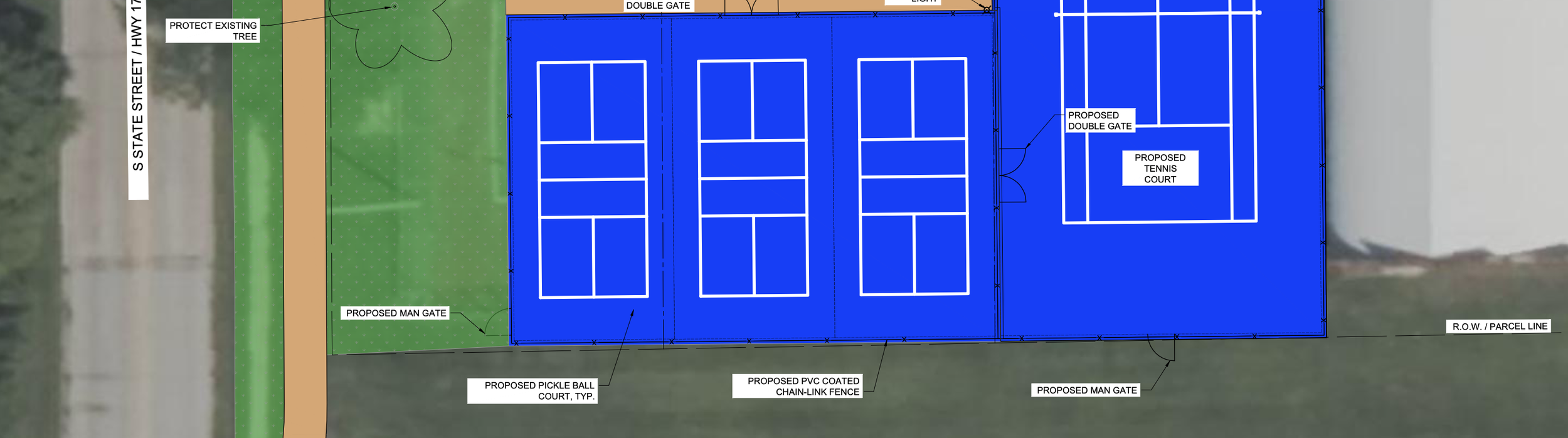
Wrap up precedent project research on tennis courts or other recreational spaces + design/art for midterm presentation next week
Draw up project proposals based on what I’ve learned about the tennis courts and library as third places to send to community staff either next week or the week after — depending on what seems like the best way to present these ideas and committee feedback
Compile background research on community (and consider where I’ll put this in the thesis write-up)
Continue “rural design” booklet photo collection and begin layout design
Continue exhibition planning — what other items do I need to begin designing?
(Didn’t do this last week) Think about starting lit review! Pretend I’m starting the thesis writing - what’s it called? What’s my problem statement? What’s the lit review focused on? Start compiling allll the research around that theme — altering this plan to adapt research for the midterm presentation