❋
September 11, 2026Swerve!
Week 3What I’ve Made
Plans
I haven’t heard back from the original community I reached out to; however, thanks to my friend’s mom, I’m now in touch with a neighboring community that expressed interest in working with me on a project. (Serendipitous?) I’m meeting with the city clerk to chat more and have been prepping questions to get to know her and the town’s landscape a bit better, as well as introduce my project parameters:
How long have you lived in [town]? What brought you here?
What has kept you here?
How would you describe the town? Have you seen it change at all?
What is your favorite place in [town]?
What do you see as [town’s] assets?
What do you see as potential?
For you and the community, what would be the function of the project? Adding to the presence of art in the community, something for people to participate in, or something to address a larger community challenge? (This question is directly informed by Jennifer Drinkwater’s article 6 Quick Questions to Ask Before Starting a Creative Community Project, linked below.)
I’ve also been drafting a few loose project proposals. Mainly, I want to make sure that if I partner with a community on a project, it’s something that helps them out and also stays in line with my interests for my thesis! A few project parameters I have in mind are:
Majority of the project is happening in the fall
Focus on storytelling in small rural towns/places / telling the community’s story
This can take a lot of forms: interviews, photos, videos, written stories, events…
I don’t want to rule out these ideas:
A “living archive” (more on this below) or a story archive (which could be the same thing)
An interactive community art project that helps build social capital (for example, a street painting)
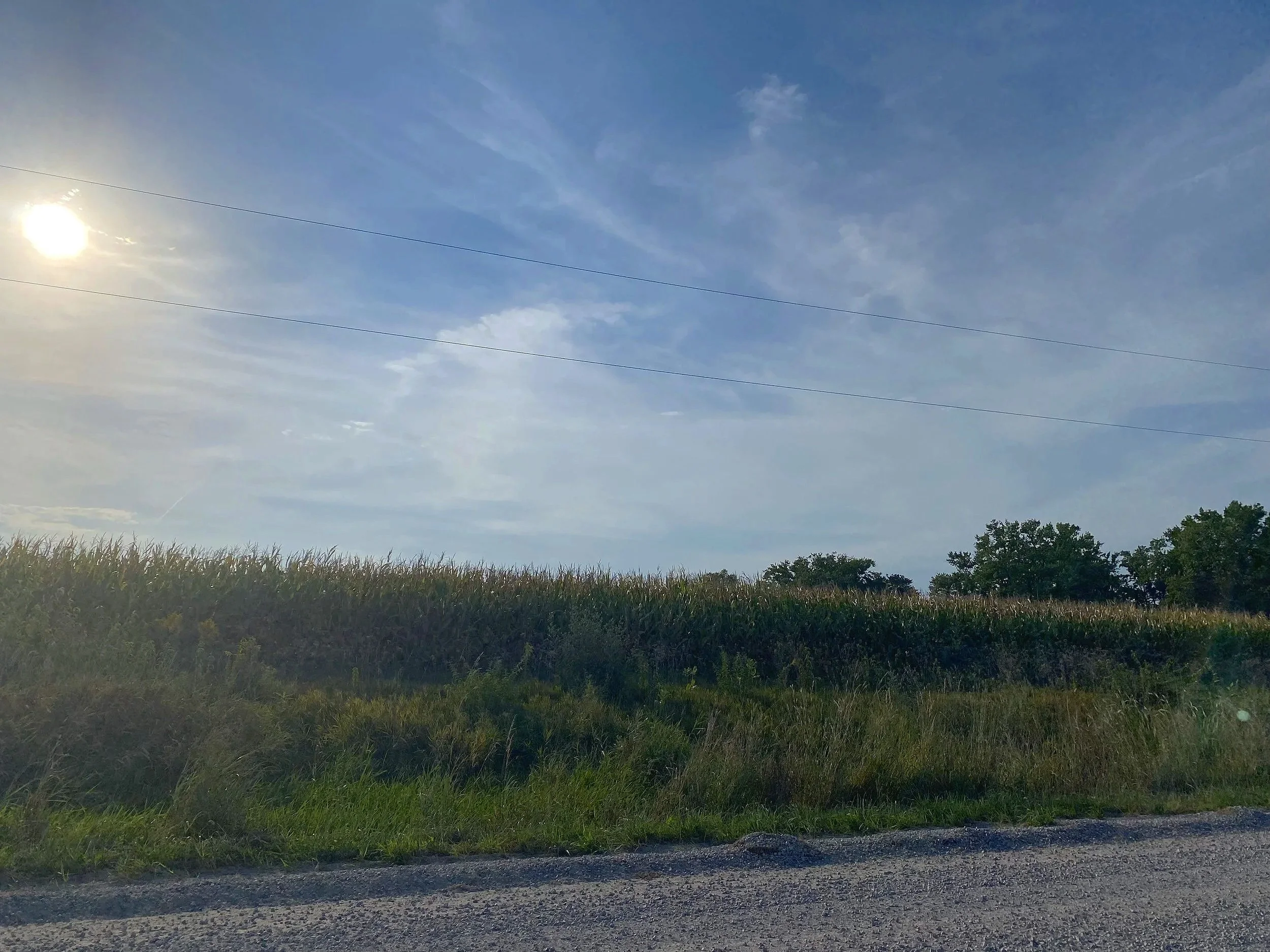
I also had the chance to drive through this community over the weekend and took photos to log how the town is already telling its story. I saw several murals and a garden square, and I took note of the imagery they’re using to describe their place.
I also met with Jennifer Drinkwater to discuss working with a community in more detail. She is very knowledgeable in working with communities across Iowa and the U.S., especially rural communities, on projects in the arts. She has been very helpful in sharing her experience and providing ideas for questions to ask and parameters to consider!
Prints
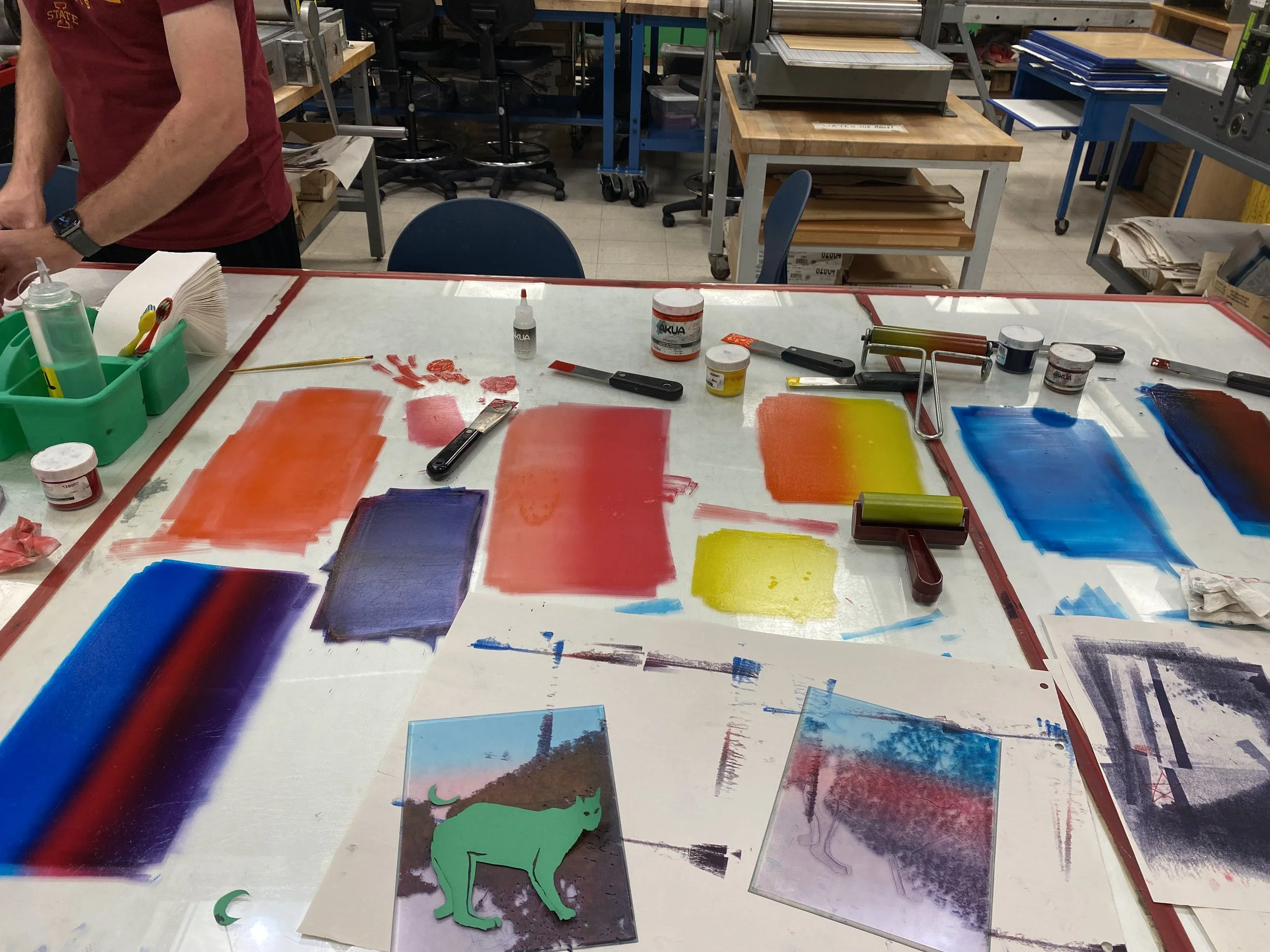
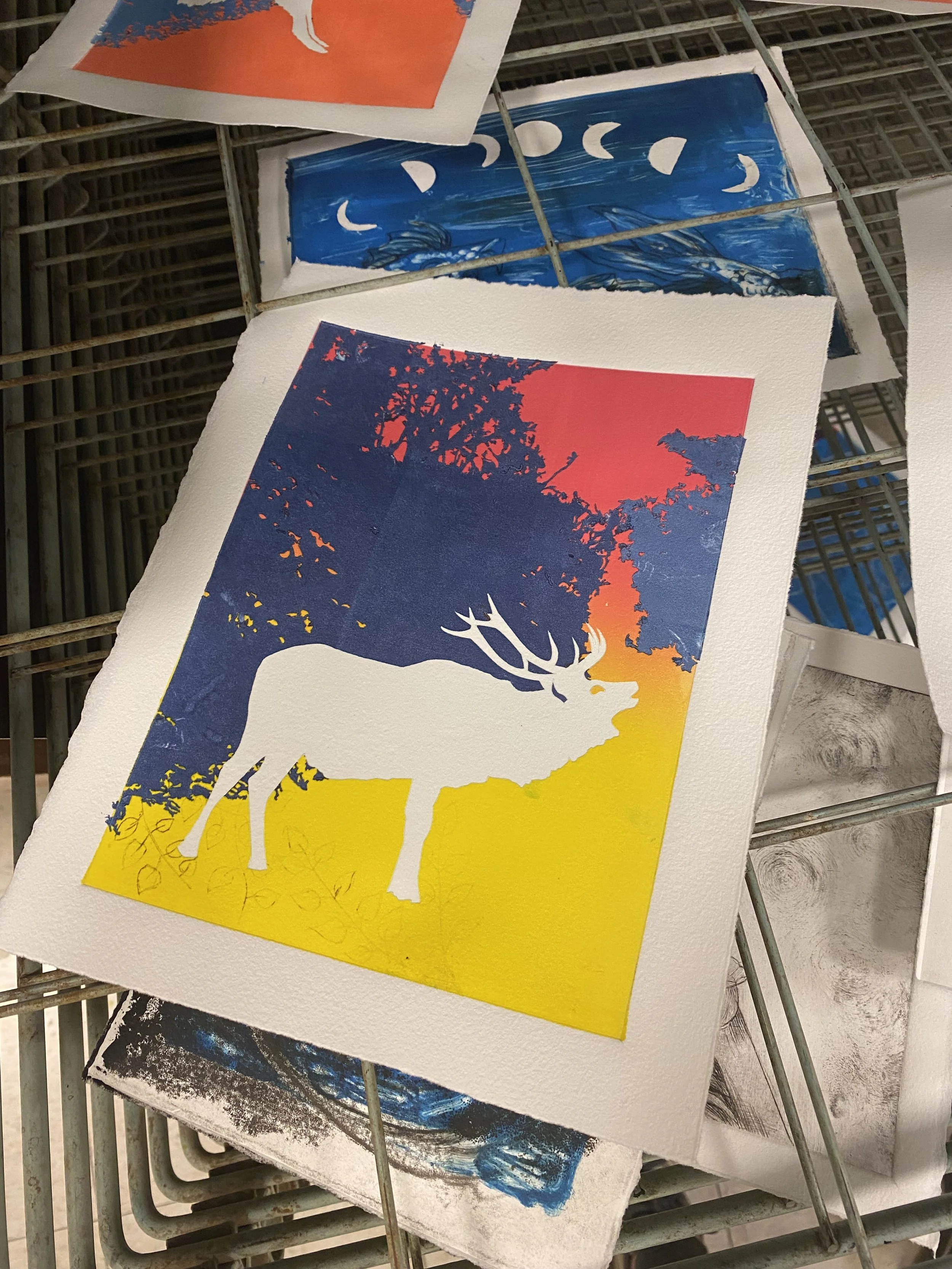
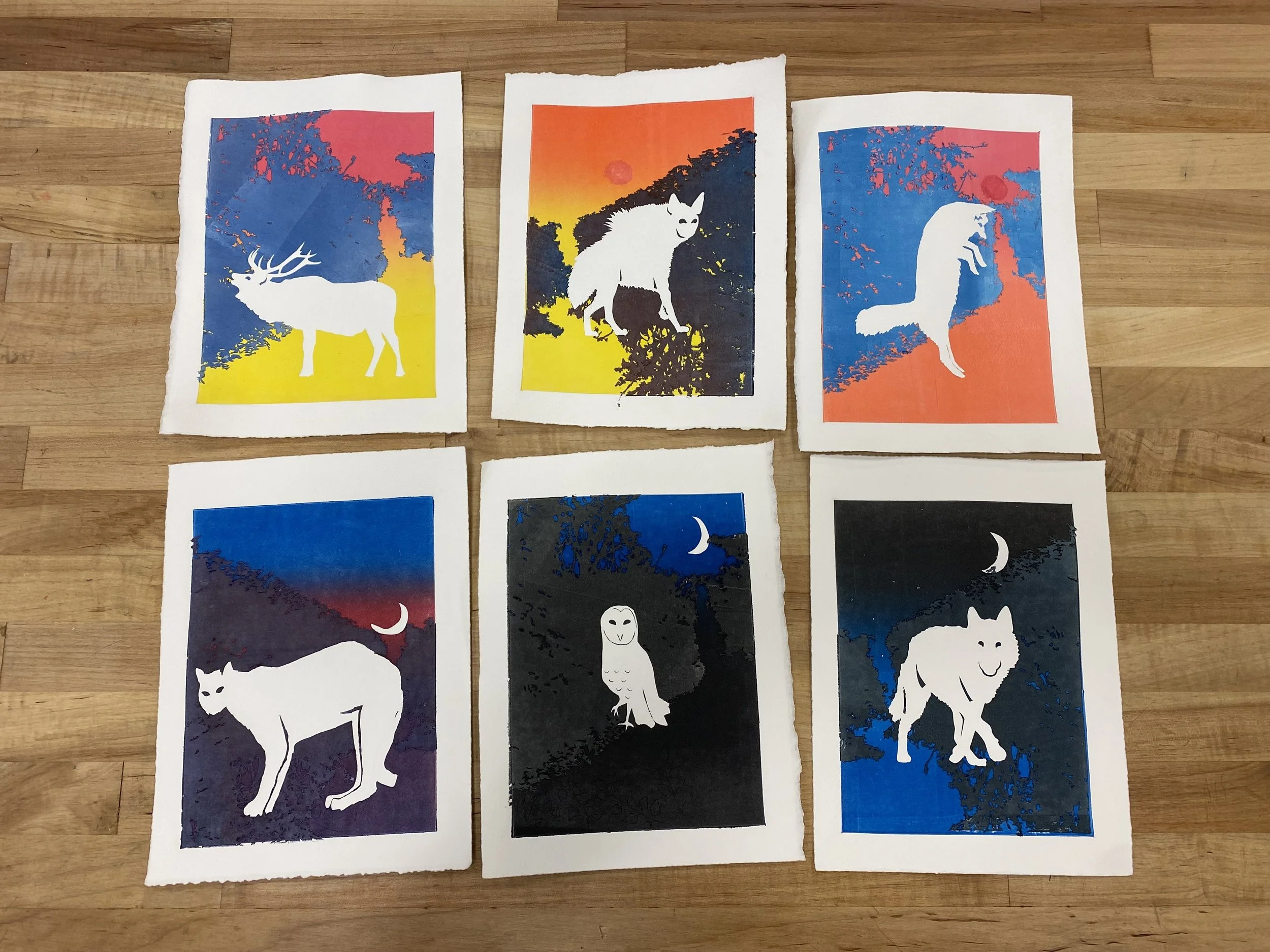
I’ve been creating prints for my myths and legends project around the family myth of The White Animal — below is a progress update!
I hope to display a few prints I make this semester in my exhibition, and I’m excited about this theme of telling stories from rural places through prints.
While I was with my family over Labor Day Weekend, I also looked back at my grandma’s writing for the local newspaper on The White Animal — directly informing my work for this project. The particular place, the Thousand Acre Woods, is also key to the project development — the trees in the background of many of these prints are directly from a photo of the Thousand Acres. This is helping me explore how place attachment can strengthen through storytelling, a theme I hope to take into a project with a local community.
What I’ve Been reading
Journal articles
Rurality as a Key Factor for Place Attachment in the Great Plains
Selected quotes:
“Research on residential mobility has often focused on why people leave a place, rather than why they choose to stay” (p. 1).
“Research on rural and urban dwellers suggests that people who live in the country are more attached to their homes and local areas than people in urban areas” (p. 3).
“A rural place is defined as an absence of the urban” (according to the United States Census Bureau - p. 8).
“This local attachment is the result of relationships that have developed over time, as family ties and general familiarity have led to many rural residents having a strong sense of belonging to the community” (p. 14).
“We are convinced that, rather than indicating an unreflective connection to community and landscape, rootedness describes an emotional attachment born out of time spent in place and reflection on that experience” (p. 15).
“Such work may also go a long way in challenging narratives of rural places as empty or placeless” (p. 15).
“Is there a relationship between the time spent in a rural environment or community and the development of a strong attachment to a place?…Does rural living offer a qualitatively different kind of deep involvement with place…one that builds an entirely different sense of place?” (p. 16).
“As the Great Plains and other rural areas of the United States continue to hollow out, what is lost in terms of contented rural immobility?” (p. 16).
“We see a need for coordinated research projects that allow for in-depth qualitative research with rural residents along an extended set of research sites, creating a means to compare differences among place. We suggest that the outcome of such research will be of interest…to those who live and work in rural communities. Rural migration research will benefit individuals and groups who are concerned about the vitality of rural communities” (p. 17).
A region “where rural depopulation has endured, but deep-rooted attachment to place remains” (p. 17).
My Notes:
I didn’t feel this paper provided groundbreaking information to me, but it legitimized things I already feel. Ties to family and ancestors increase a sense of attachment to a place. It was interesting to me that research is finding generally people from rural areas have a stronger sense of attachment to their place than people in urban areas, and that they often express more contentedness with their place, too (at least those who have stayed).
Also important to know is that place attachment really comes from time spent in a place. I’ve felt this too — that one community art project is not going to necessarily strengthen a sense of attachment for people in a place. It takes time, depth, people, history…etc. for those emotional bonds to become strong. “To know a place well requires long residence and deep involvement” (Tuan as quoted by Husa & Morse, p. 16).
Reference: Husa, A., & Morse, C. E. (2020). RURALITY AS a KEY FACTOR FOR PLACE ATTACHMENT IN THE GREAT PLAINS. Geographical Review, 112(1), 27–45. https://doi.org/10.1080/00167428.2020.1786384
Other media
Why Rural Places Need Living Cultural Archives
“A rural place is not culturally empty because it is hard to find online. Often, its richest knowledge is held in relationships, memories, practices, and places that conventional archives do not know how to capture.”
This idea of rural cultural archives is fascinating! I love how they mention a living archive contains any and everything — food, nature, people’s stories, photos, art, music, etc. I also appreciate how they mention this must be useful to the community and how it can be useful - teaching history, introducing the community to a new resident or visitor, etc.
6 Quick Questions to Ask Before Starting a Creative Community Project
As mentioned above! I got to take a course with Jennifer last fall and work with the community of Slater, and I knew she’d be an expert resource for potentially working on a community project so I hopped over to her blog. There are so many good articles there, and this one seemed especially pertinent for what I’m looking to do.
The article outlines how to determine what sort of project you and the community will work on. It could be studio art, public art, or community art. Each bring a different level of engagement. It could strengthen a presence of art in the community, invite the community to participate, or help solve a larger challenge. These are all goals to discuss and agree upon at the beginning.
Several case studies from smaller communities, including a few in Iowa, that received funding while this program operated to increase arts engagement.
Up next
Quite a bit of my next direction will depend on how my conversation with the city clerk goes, but I have these activities either already planned or on my radar:
Meet with community city clerk (Monday 9/14)
Wrap up print project
Meet with committee members
Work on setting up interviews with people recommended by clerk?
Plan times to visit the community and attend event(s)
Continue adding to questions to ask community members
Continue looking into the ideas of rural living archives and storytelling to help finesse my proposal